Best Carpet for Pets, Kids & Asthma-Sensitive Homes
Trade guide to selecting stain-resistant, claw-safe, and low-allergen carpets for busy family spaces across South London, Surrey, Kent, and Sussex.
Direct Answer Summary: Finding the right carpet for a busy home requires balancing liquid stain resistance, claw safety, and indoor dust management. Solution-dyed synthetic twist carpets combined with high-density underlay offer optimal durability for pets and children while keeping fine dust contained for easy vacuuming.
Choosing flooring for a active household means balancing daily comfort with practical durability. Soft carpets bring warmth, acoustic damping, and safety for toddlers learning to walk, but claws, muddy paws, spilled blackcurrant juice, and trapped dust mites demand specific fibre choices, pile structures, and underlay systems.
As an independent carpet fitter with over 20 years of trade experience fitting flooring across South London and Surrey, I have seen which carpets hold up against daily family wear and which fail within months. This guide explains how to choose stain-resistant, claw-safe, and low-VOC carpet options tailored to your specific household needs.
Why Consult an Independent Trade Carpet Fitter?
Direct Trade Guidance: Consulting an independent trade carpet fitter ensures unbiased material recommendations based on real-world wear patterns rather than sales commissions, accompanied by precise British Standard installation.
High-street carpet showrooms often push specific stock items regardless of whether they suit your household's daily reality. An experienced independent fitter looks at your room layout, subfloor condition, pet habits, and foot traffic patterns before recommending a single sample.
Unbiased Material Guidance
We supply and fit top UK carpet brands as well as offer a labour-only fitting service if you purchase carpet independently online.
Mobile Showroom Comfort
Examine full-size carpet swatches under your home's actual lighting alongside your furniture and wall colours.
Subfloor & Underlay Expertise
Subfloor moisture or uneven floorboards can compromise carpet longevity. We inspect, subfloor prep with plywood or screed, and install high-density underlay for maximum underfoot comfort and thermal performance.
BS 5325 Standard Installation
Mechanical power stretching and precise seam joinery ensure your carpet remains flat, tight, and ripple-free for its entire working lifespan.
Learn more about our complete carpet fitting service for domestic properties across the region.
Best Carpet for Homes with Dogs & Cats
Direct Answer for Pet Owners: Solution-dyed polypropylene twist pile carpets are the best choice for pet owners because they resist liquid staining, permit 10% bleach cleaning for pet accidents, and feature cut pile tufts that prevent claw snagging.
Living with dogs or cats requires flooring that can withstand muddy paws, sharp claws, and occasional pet accidents without staining or fraying.
Loop Pile vs Pet Claws
loop pile → pet claws → snagging risk: Loop pile carpet structures (such as Berber) consist of unbroken yarn loops attached to the backing. Cat and dog claws easily hook into these loops, pulling long strands of fibre out, unraveling rows, and damaging the backing structure. Cut pile carpets (twist or saxony) feature individually sheared yarn tips, allowing claws to slide out smoothly without snagging.
Synthetic vs Wool Staining
synthetic polypropylene vs 80/20 wool blend → stain resistance vs resilience: Solution-dyed polypropylene fibres have colour pigments locked into the liquid polymer during manufacturing. This makes the fibre impervious to urine, mud, and vomit, allowing spot cleaning with diluted household bleach (10% solution). In contrast, 80/20 wool blend carpets absorb liquids quickly due to wool's natural porous cuticles, requiring immediate specialized neutralising agents to avoid permanent discoloration.
Key Pet-Friendly Features
- Cut Pile Construction: Sheared twist pile tufts prevent claw snagging and thread pulls.
- Solution-Dyed Polypropylene: Bleach-cleanable, non-porous fibres that resist pet urine and mud.
- High-Density PU Foam Underlay with Moisture Membrane: Prevents liquid spills from soaking down into timber floorboards or concrete screed, eliminating trapped subfloor odours.
Need Expert Help Choosing?
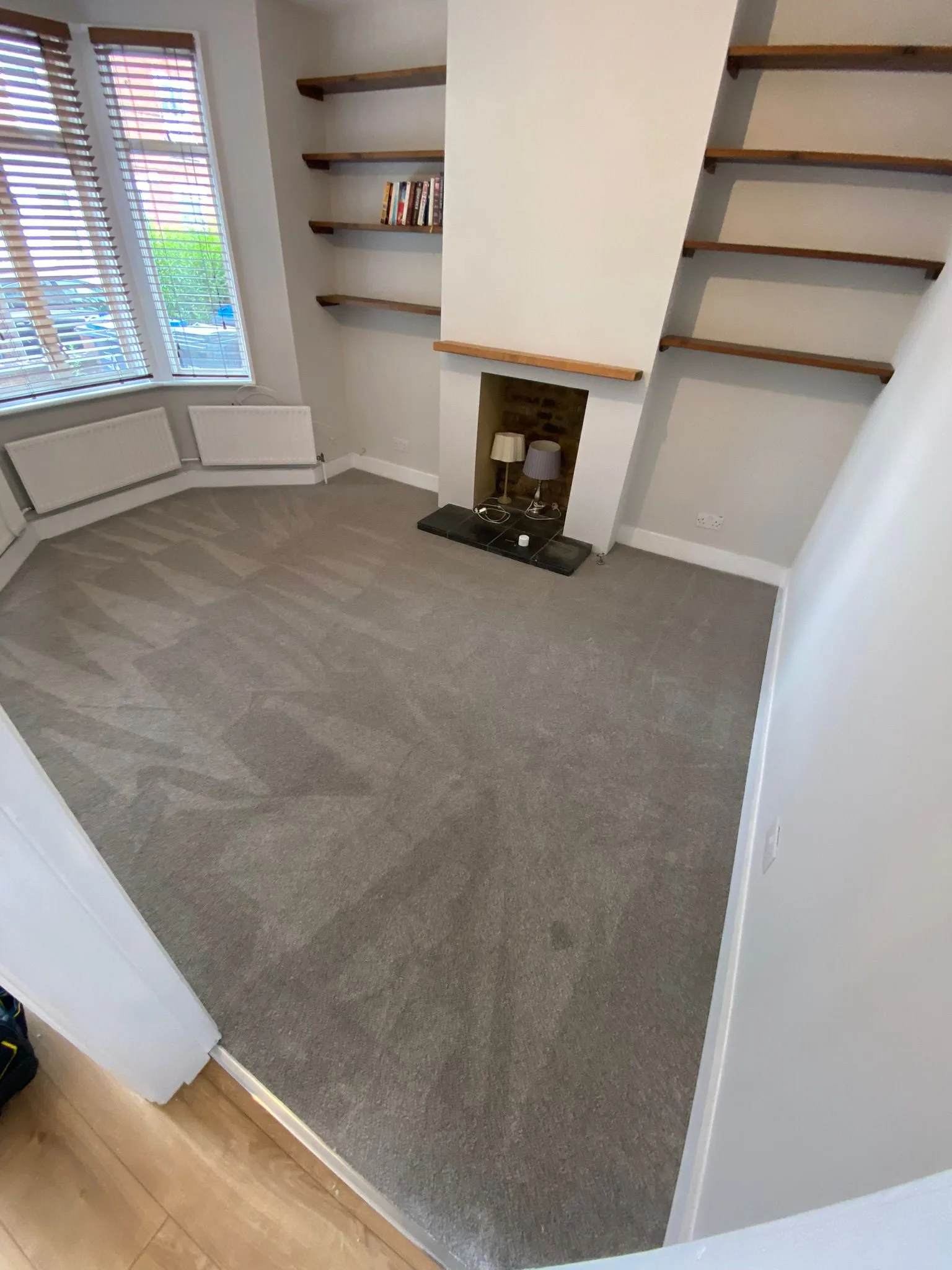
Skip the showroom trips. We bring a full range of pet-friendly and easy-clean carpet samples directly to your home.
Best Carpet for Children's Bedrooms & Playrooms
Direct Answer for Families: High-density synthetic twist carpets paired with a 10mm PU foam underlay provide the ideal surface for children, combining heavy cushion impact protection for floor play with stain-defying fibres for accidental spills.
Children spend hours playing directly on bedroom and playroom floors. Flooring in family spaces must cushion accidental tumbles while resisting juice boxes, felt-tip pens, mud, and everyday play friction.
Impact Damping & Thermal Comfort
A thick 10mm high-density underlay (110kg/m³ density) under a soft synthetic twist carpet creates a warm, comfortable play surface while reducing impact noise between floors.
Spill & Stain Defence
Solution-dyed synthetic fibres resist water-based and oil-based spills. Common household accidents like dropped juice or food can be blotted clean using mild detergent or diluted white vinegar without stripping carpet colour.
Selecting the Right Texture & Tone
Mid-tone heathered colours (blends of grey, beige, or taupe) naturally camouflage light dust and minor marks between regular weekly vacuuming.

Carpet Selection for Asthma-Sensitive & Dust-Conscious Homes
Direct Answer for Dust Control: For asthma-sensitive homes, low-pile twist carpets with low-VOC emissions combined with high-density underlays help control airborne allergens when maintained with regular HEPA-filtered vacuuming.
For households managing dust sensitivities, carpet selection focuses on environmental dust control, low volatile organic compound (VOC) emissions, low pile heights, and sealed underlay barriers.
Air Quality & Barrier Underlay
low VOC carpet + high density underlay → dust mite reduction & air quality: Low Volatile Organic Compound (VOC) carpets are tested under Eurofins Indoor Air Comfort or GUT standards to ensure minimal chemical off-gassing post-installation. Pairing low-VOC carpet with dense, non-porous PU foam underlay seals subfloor gaps, blocking dust mites, spores, and subfloor damp from rising into indoor room air.
Environmental Dust & Allergen Management Protocol
- Trapping vs Airborne Drift: Smooth hard floors allow dust motes and pet dander to drift into air currents created by foot traffic or heating vents. Carpet fibres trap settled particles at floor level, keeping them out of the breathing zone until extracted by vacuuming.
- Short Cut-Pile Tufting: Choose short, tightly twisted pile (6mm to 8mm height). Avoid deep, shaggy saxony carpets, which trap deep dirt that is difficult to extract.
- High-Efficiency Particulate Air (HEPA) Vacuuming: Vacuum twice weekly using an upright vacuum fitted with a certified HEPA filter and rotating brush bar to lift trapped dust out of the pile.
- Sealed Underlay Barrier: Dense 8mm to 10mm underlay prevents dust mites from establishing breeding colonies in subfloor cavities.

Read our comprehensive carpet underlay guide for details on choosing high-density, low-allergen underlays.
Recommended Carpet Types by Household Zone
Direct Answer by Room: Stairs and hallways require short, high-density 80/20 wool or synthetic twist carpet with 8mm high-density underlay, whereas bedrooms suit plush 10mm synthetic twist carpets for maximum underfoot luxury.
| Room Zone | Recommended Carpet Type | Pile Height & Structure | Recommended Underlay | Primary Benefit |
|---|---|---|---|---|
| Stairs & Hallways | 80/20 Wool Blend or Heavy Twist Polypropylene | Short, dense 7mm–8mm Twist | 8mm High-Density (110kg/m³) | Crushing resistance over stair nosings, maximum footfall durability |
| Living Room | Solution-Dyed Polypropylene Twist | 8mm–10mm Twist | 10mm PU Foam | Stain resistance against pet/kid spills with balanced underfoot comfort |
| Children's Bedroom | Solution-Dyed Polypropylene Twist | 9mm–11mm Soft Twist | 10mm High-Density PU Foam | Cushion protection for floor play, bleach-cleanable for accidents |
| Master Bedroom | Soft Saxony or Luxury Wool Twist | 10mm–12mm Cut Pile | 10mm Ultra Luxury PU Foam | Thermal insulation, sound damping, premium luxury feel |
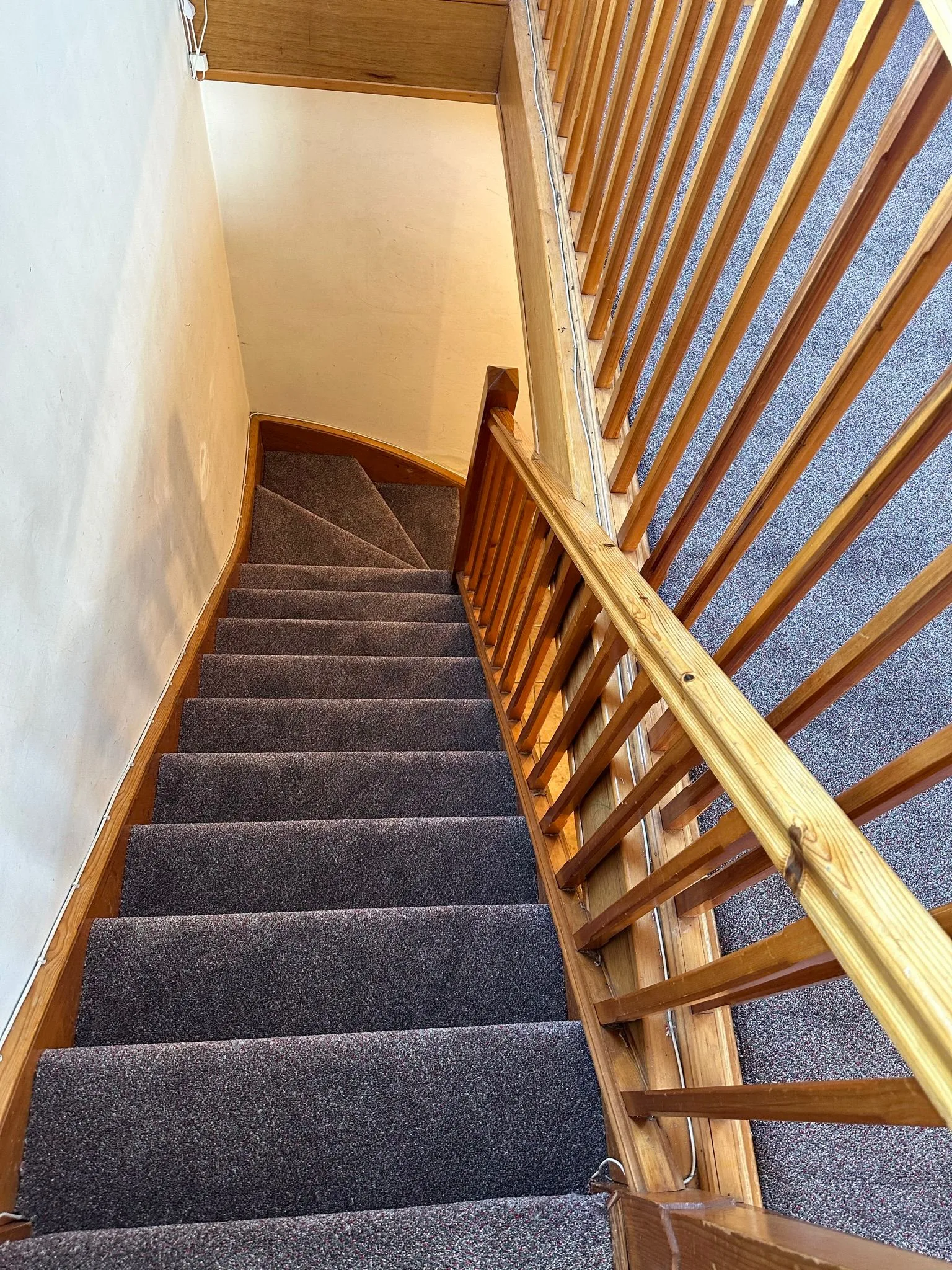
We specialise in precision fitting on complex staircases; view our dedicated stairs carpet fitting services.
Get a Free Quote & Advice
Let us inspect your subfloor and recommend the exact carpet and underlay combination for your household's needs.
Our 4-Step Trade Consultation & Fitting Process
Direct Answer Process: We guide homeowners through an in-home evaluation, sample lighting test, subfloor moisture check, and British Standard power-stretched fitting.
1. In-Home Assessment
We discuss your household dynamics — pets, children, traffic levels, and dust sensitivity — to establish exact performance criteria.
2. Mobile Showroom Selection
Test actual carpet samples directly in your home to evaluate how colours look under natural day and artificial evening lighting.
3. Subfloor Inspection & Preparation
We check subfloor moisture, inspect existing gripper rods, and ensure subfloors are smooth using marine-grade plywood or latex screed where necessary.
4. BS 5325 Standard Fitting
We stretch carpet using knee-kickers and mechanical power stretchers, securing neat perimeter tucked edges and seamless door threshold transitions.
Cut Pile vs Loop Pile: Trade Comparison
Direct Answer Pile Comparison: Cut pile carpet tufts are cut at the surface, preventing claw snagging and facilitating easy dust extraction, whereas loop pile loops hook claws and trap debris within continuous fibre loops.
| Feature | Cut Pile (Twist / Saxony) | Loop Pile (Berber / Level Loop) |
|---|---|---|
| Claw Safety (Pets) | Excellent (No loops to catch claws) | Poor (High snagging and pulling risk) |
| Stain Removal Ease | High (Fibre tips release trapped spills) | Moderate (Spills settle inside loop core) |
| Vacuuming & Dust Control | High (HEPA vacuum easily extracts dust) | Moderate (Dust can settle under loop bends) |
| Footprint Appearance | Mild tracking on deep saxony | Textured, hides vacuum lines |
| Recommended For | Pets, toddlers, asthma-sensitive rooms | Adults-only rooms, quiet home offices |
When Hard Flooring is Recommended Over Carpet
Direct Answer Hard Flooring: Hard flooring like Luxury Vinyl Tile (LVT) or sheet vinyl is preferable for wet utility areas, dining spaces, or homes with un-house-trained pets where frequent liquid mopping is required.
While carpet offers superior warmth and acoustic comfort, certain household situations call for hard flooring solutions:
- Un-House-Trained Pets: Senior pets or new puppies with frequent wet accidents benefit from waterproof Luxury Vinyl Tile (LVT) or sheet vinyl, which can be disinfected instantly without soaking into underlay.
- Dining & Kitchen Areas: High spill zones where food particles and sticky liquids are dropped daily are easier to maintain with damp-mopped hard surfaces.
- Severe Damp / Ground Floor Utility Rooms: Subfloors prone to high humidity are better suited for glue-down LVT with damp-proof membrane (DPM) treatment.
- Zoned Household Approach: Many of our clients fit LVT in hallways and kitchens, pairing it with plush carpet in upstairs bedrooms and stairs for comfort and safety.
Frequently Asked Questions
Direct Answer FAQ Summary: Concise trade answers to common questions about carpet selection for pets, kids, and dust-sensitive homes.
What is the single best carpet fibre for dog and cat owners?
Solution-dyed polypropylene is widely considered the best carpet fibre for pet owners. It is non-porous, highly resistant to staining from urine or mud, and bleach-cleanable with a 10% household bleach solution.
Is carpet or hard flooring better for asthma and dust sensitivities?
Both can work well if maintained correctly. Carpet traps airborne dust particles at ground level, stopping them from circulating in air currents until vacuumed with a HEPA filter. Hard floors allow dust to drift freely into the air unless swept or damp-mopped daily.
Can loop pile Berber carpet be fitted in homes with cats or dogs?
It is not recommended. Cat and dog claws frequently catch on the unbroken loops of Berber carpet, leading to pulled threads, unraveling rows, and potential damage to pet claws.
What carpet underlay is best for stopping pet moisture and dust mites?
A 8mm to 10mm high-density PU foam underlay with an integrated moisture-resistant top film is ideal. It prevents liquid spills from reaching the subfloor and creates a barrier against dust mite migration.
Can I clean polypropylene carpets with household bleach?
Yes, 100% solution-dyed polypropylene carpets can be cleaned using a diluted solution of 1 part domestic bleach to 9 parts water (10% solution) to remove stubborn pet stains and sanitise fibres.
Which carpet pile height is easiest to vacuum clean with a HEPA vacuum?
A short to medium twist pile height between 7mm and 9mm is the easiest to vacuum. It allows vacuum brush bars to penetrate the base of the pile and extract trapped dust efficiently.
How often should carpets be replaced in busy family homes with children?
Quality synthetic or wool blend carpets fitted over good underlay typically last 10 to 15 years. In high-traffic family areas, replacement may occur around 8 to 10 years to refresh style and hygiene.
How does low VOC carpet fitting improve indoor air quality?
Low VOC carpets release fewer volatile organic compounds after installation, reducing chemical odours and preserving fresh indoor air quality for sensitive occupants.